Debaoyi Natural Plants
1 / 4
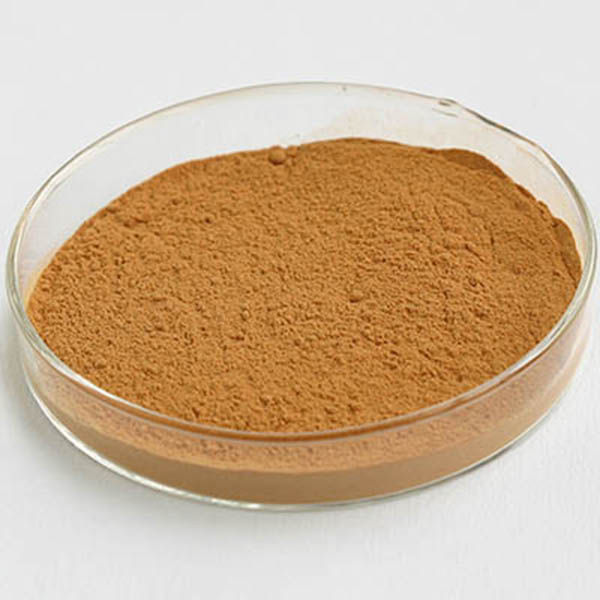
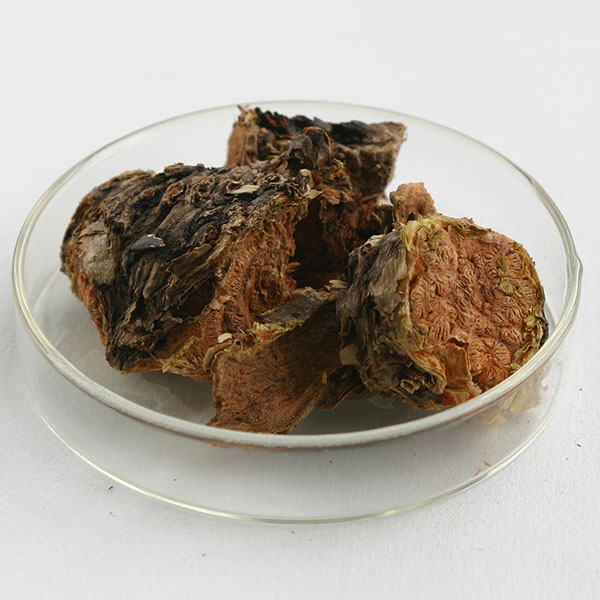
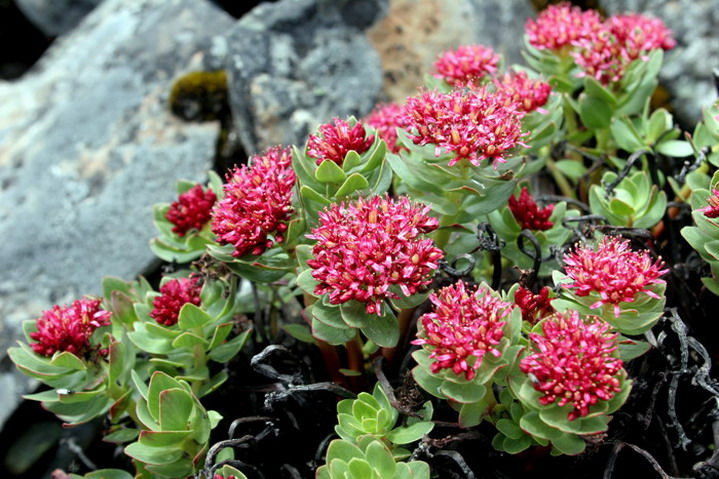
Latin Name: Rhodiola rosae L./ Rhodiola crenulata SH. Fu.
Family: Crassulaceae
Part of the Plant Used: Root
Rhodiola rosea ("golden root" or "roseroot") is widely distributed at high altitudes in Arctic and mountainous regions throughout Europe and Asia. It was named by Greek botanist Linnaeus because when cut the fresh root, people can smell the perfume of roses.
Rhodiola characters cold in nature, sweet, bitter and astringent, able to nourish one's lung and clear away internal heat. Rhodiola is another important environmentally-adaptable natural medicament after Panax and thorn slender acanthopanax. Unlike other stimulants, Rhodiola has few side effects and a promising future in health applications.
Since 1976, Rhodiola has been used to resist fatigue, enhance mental and physical function, and improve attention and memory. It is clinically applied to treat neurasthenia, hypertension, and to improve intelligence or autonomic nerve balance. It is also regarded as an invigorator to treat diseases caused by free radical proliferation.
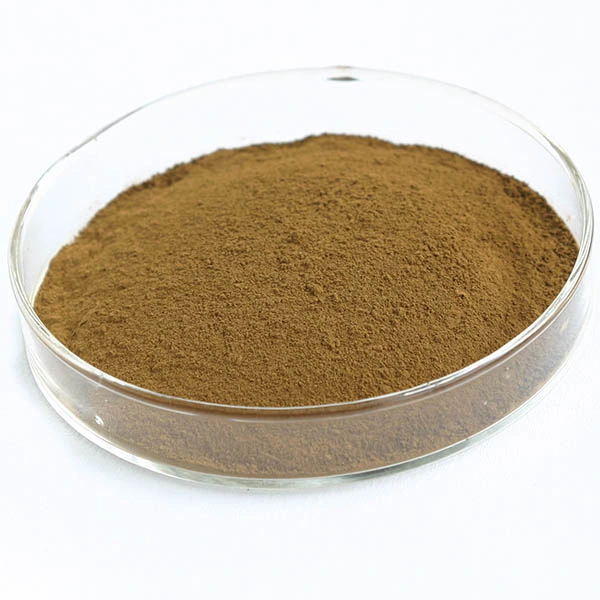
| Analysis Items | Specifications (Rhodiola rosea) | Test Methods |
|---|---|---|
| Botanical Resource | Rhodiola rosea | Taxology |
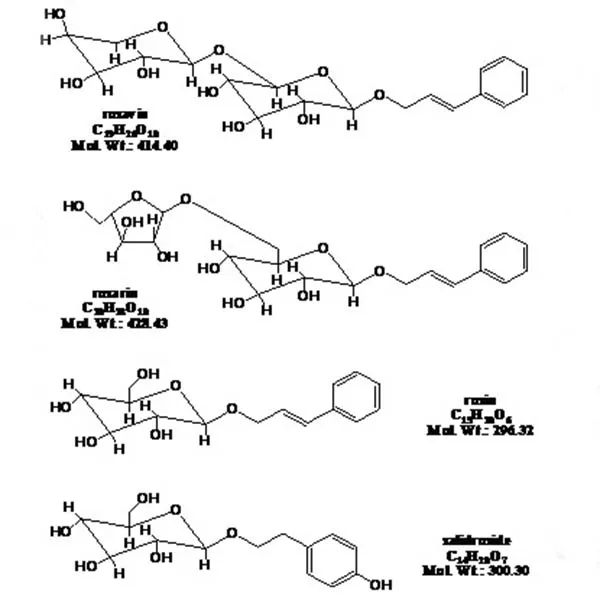
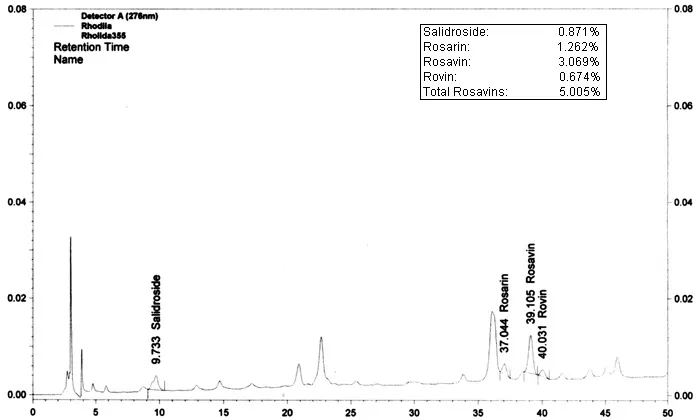
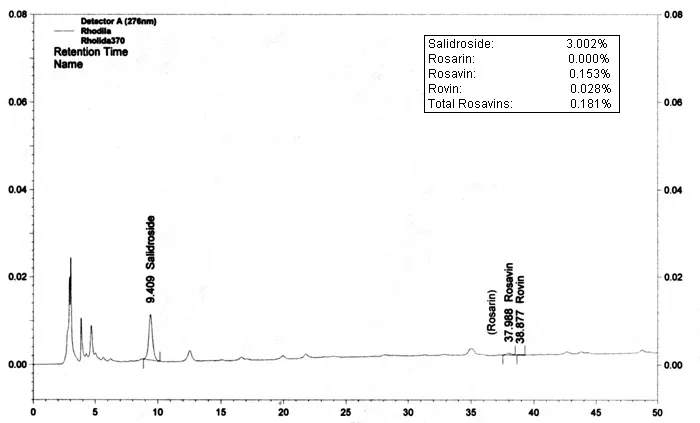
| Assay | Polyphenols 50%, Rosavins 3%-5%, Salidroside 1%-3% | UV-VIS / HPLC |
| Moisture Content | NMT 5.0% | 5g/105ºC/2hrs |
| Heavy Metals | NMT 10ppm | Atomic Absorption |
Rhodiola root extract is low in toxicity with few side effects. If excitability or nervousness occurs, start with a lower dosage. It is suggested to take in the morning as it may affect sleep patterns initially. It is forbidden for use with manic-depressive psychosis patients as it may increase antidepressant effects.